A Blue Light Organisation

blue-light-organisation-casestudy
Case study Battery Safes Phoenix Safe

Case Study:
A Blue Light Organisation
Enhancing Lithium-Ion Battery Safety

A national policing authority, operating across critical national infrastructure, faced increasing risks associated with the storage of confiscated lithium-ion batteries. Due to the sensitivity of the information and to protect critical national infrastructure, the client has chosen to remain anonymous.

Case study Battery Safes Phoenix Safe

THE CHALLENGE –
Safety and Reliability Concerns

The authority initially proposed a centralised model, requesting several large battery safes with full fire suppression systems. However, operational analysis revealed significant challenges, including:

  • Increased risk during the transportation of hazardous batteries.
  • Inefficiencies from moving items across geographically dispersed sites.
  • Budget constraints limiting full network coverage.

The authority required a safer, more practical solution that would protect both personnel and infrastructure without compromising operational effectiveness.

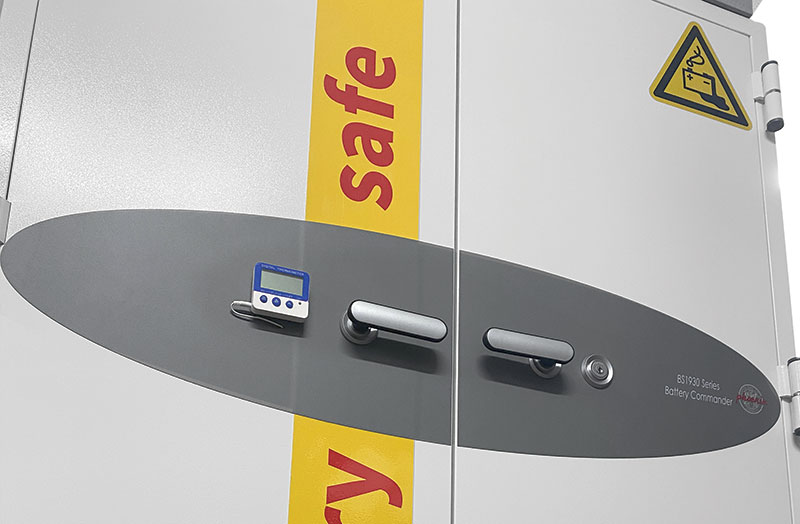
Battery_Commander_Front_Detail-Phoenix-Safe
BS1934E Battery Commander Phoenix Safe
Case study Battery Safes Phoenix Safe

The Solution

After a comprehensive risk assessment and consultation, a decentralised approach was recommended.

The focus shifted to providing on-site storage at each operational location, eliminating the need for hazardous transportation and ensuring immediate secure storage.

Key elements of the solution included:

Decentralised Storage Model: Instead of a few large central safes, smaller, strategically placed safes were installed at each site, making secure storage readily available where needed.

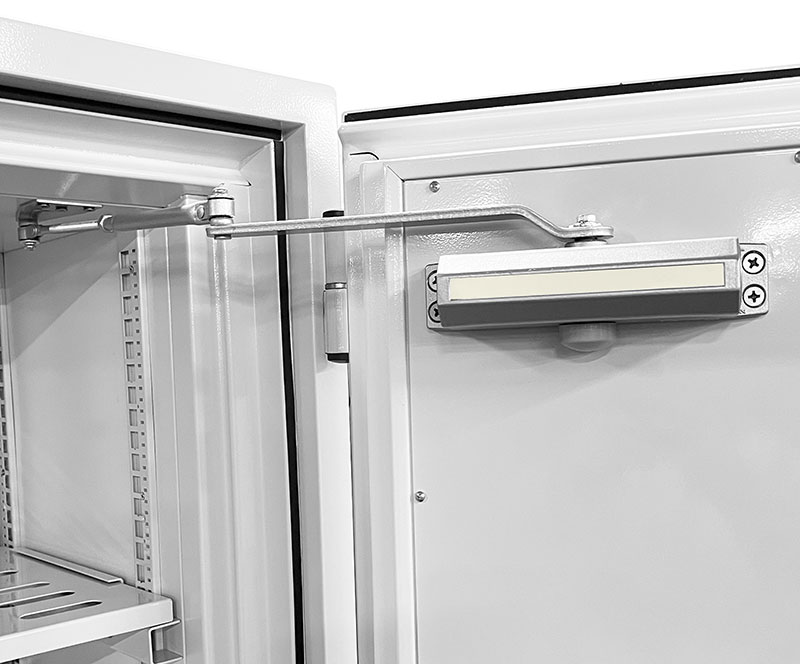
Battery Storage Units: Smaller units, such as the Model 1283 ­– Battery Titan Large Model and Model 0442­– Battery Fighter Medium Model, were deployed, offering digital  locking, smoke detection, robust steel construction, and internal shelving. Larger units, such as the Model 1934­ – Battery Commander Large Model (available in charging and non-charging versions), were reserved for forensic investigation sites, ensuring compliance with specific forensic security protocols.

Focus on Fire Prevention: By opting for safes without integrated charging where unnecessary, the risk of thermal runaway incidents was significantly reduced.

Digital Access Control: A unified code system was implemented, enabling authorised officers to access the safes swiftly while preventing unauthorised entry.

Cost Efficiency: Recalculations showed that decentralised safes allowed almost every operational site to be equipped, enhancing safety coverage across the network with only a marginal increase in investment.

Future Scalability: The solution allowed for the easy addition of safes if operations expanded or safety regulations evolved.

BS1930 Battery Commander Battery Safe

Implementation

The project was carefully phased and coordinated to meet the unique challenges of a live operational environment.

Key implementation aspects included:

Stakeholder Engagement: Regular consultations were held with procurement and operational teams to align technical specifications with operational needs.

Site Surveys and Risk Assessments: Before installation, fire risk assessments and operational surveys were conducted at each location to determine the safest and most practical placement for the battery storage safes.

Flexible Deployment Scheduling: Installations were planned to minimise disruption, taking into account periods of low activity, staff relocations, or station refurbishments.

Direct Communication with Sites: A project contact was assigned to each location, ensuring clear communication about delivery times, installation procedures, and access codes.

Training and Handover: Officers at each site received guidance on safe usage, access codes, and basic fire safety protocols.

Quality Assurance: Post-installation inspections ensured each unit was correctly installed and compliant with fire and security standards.

Despite numerous challenges, including staffing levels and construction work at some stations, the project was completed successfully across nearly 150 sites, achieving full operational readiness without major disruption.

BS1930-group-battery-commander-phoenix-safe
Case study Battery Safes Phoenix Safe

The Outcome

The project delivered significant and measurable improvements to the authority’s fire safety framework:

  • All sites are now equipped with lithium-ion battery safes, greatly increasing fire safety compliance.
  • Transportation and handling risks related to hazardous batteries have been reduced.
  • Officers now have immediate access to secure storage, improving operational efficiency and enforcement capabilities.
  • Digital locking systems provided secure access control, reducing the risk of unauthorised handling.
  • Fire safety standards for forensic investigations were maintained through the strategic placement of larger specialist safes.monitoring, tailored for forensic investigation sites.

Conclusion

This project demonstrates the success of a decentralised safety strategy tailored to operational needs. Through collaboration, innovation, and flexibility, fire safety was enhanced, operations were streamlined, and battery storage practices were future-proofed across a critical UK policing network.

Translate »

Shopping cart

close